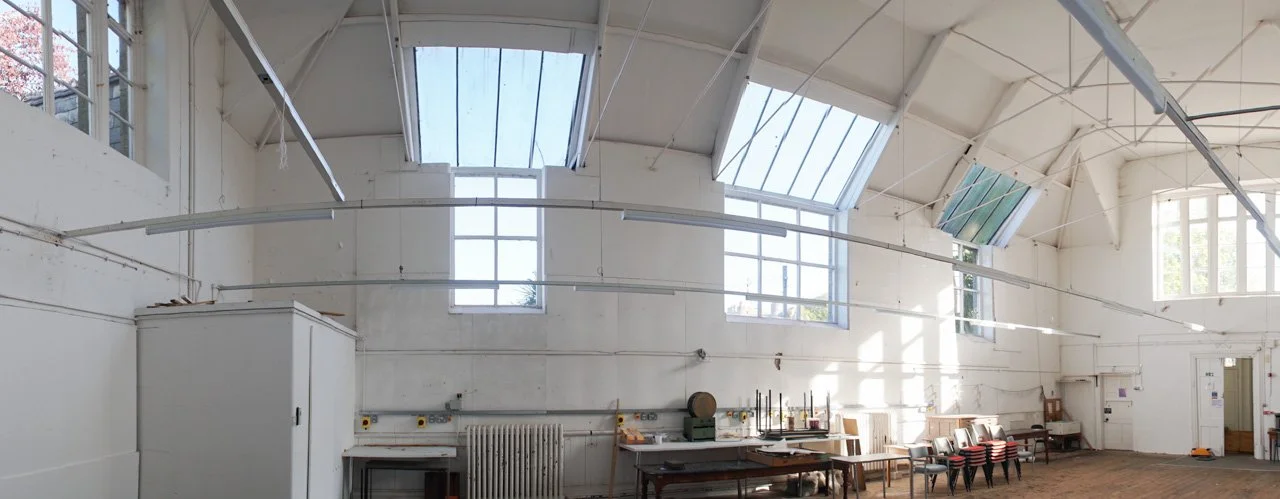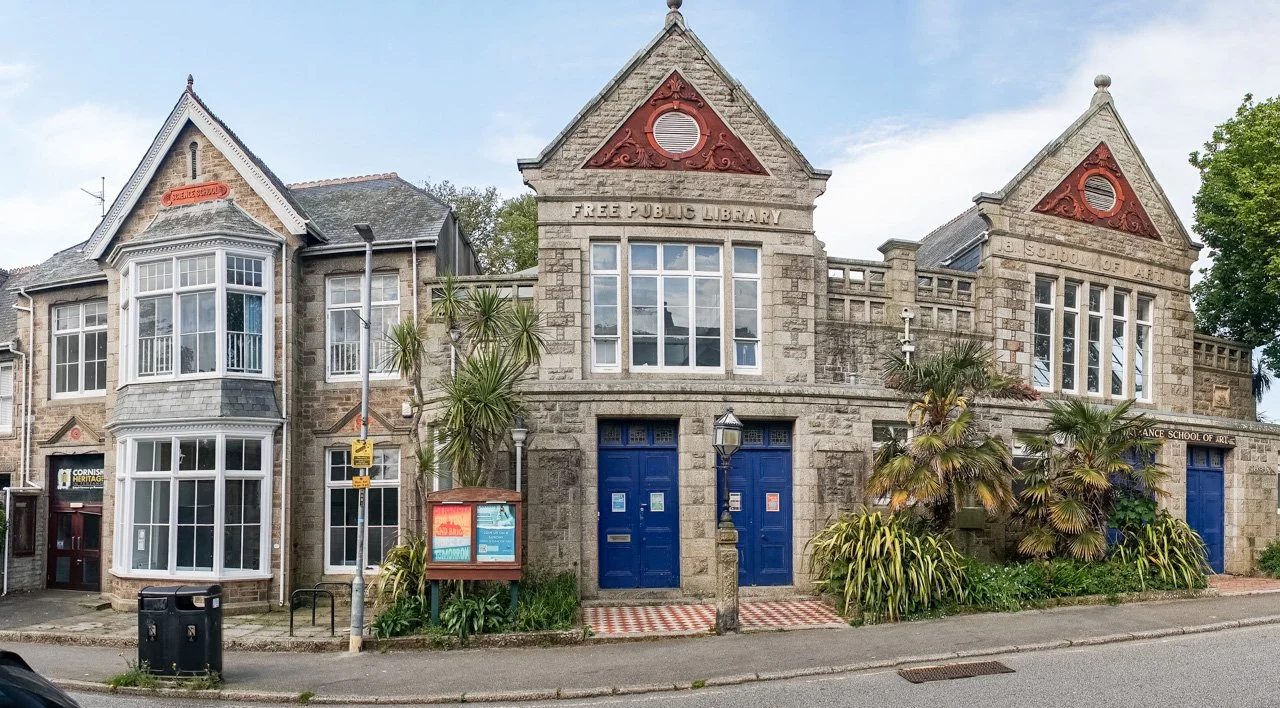
The History and Legacy of Penzance School of Art
Honoring our past, securing our future. At justlife.art CIC, we are raising the funds to buy, restore, and reopen the historic Penzance School of Art as a vibrant, community-owned art school. Our vision is to return this landmark to its true purpose: providing an educational campus for fine art, alongside dedicated community studios and affordable creative workspaces for practicing artists.As we look forward to a bright and exciting future, we pay our respects and deepest thanks to those who paved the way before us.A Note on Our History: The majority of the historical research below was gathered and compiled by local historian Peter Waverly for a special commemorative booklet commissioned by Penlee House and Penwith College (now Truro Penwith College) to celebrate 150 years of the Art School.Read on to discover the story of these incredible buildings.
The Art School's Inception (1853–1893)
The Art School on Morrab Road is as old as the street itself, but its origins run even deeper. While the physical building was constructed in 1880, the inception of an formal Art School in Penzance happened on September 13, 1853. Meeting in rooms above Princes Street Hall, it was the very first art school established west of Bristol.That first Tuesday evening, twenty pioneering students attended. The classes proved so popular that by the end of 1853, the school’s Master, Henry Malcolm Geoffroi, moved the Penzance School of Practical Art to larger rooms in Regent House on Voundevour Lane, where it thrived until 1880. Students consistently won prizes, passed rigorous fine art examinations, and competed for prestigious scholarships at the Metropolitan School. Notably, three of Mr. Geoffroi’s students—James Hicks, Henry White, and Oliver Caldwell—went on to become highly respected local architects.
[TIMELINE OF EARLY LOCATIONS] 1853 (Sept) 1853 (Dec) 1881 (March) Princes Street Hall ---> Regent House ---> Morrab Road Campus (20 initial students) (Expanded classes) (Permanent Home)
Mr. Geoffroi, a progressive educator, always envisioned a dedicated, purpose-built school. This dream became a reality in 1879 when local banker, Mayor, and MP, Mr. C. C. Ross, donated the leasehold for a plot of land on Morrab Road, which he was actively developing. To fund the build, Mr. Geoffroi, his wife Lazzie, his son Harry, and his step-daughter Fanny raised subscriptions from former students located all over the world.
A Victorian Masterpiece Takes Shape
Architect Silvanus Trevail’s utility design was accepted, and construction commenced in 1880. Contractors James Julian & Sons of Truro completed the building on a total budget of £1,220—a sum that might just cover the restoration of a single small window today!The school officially opened its doors on March 7, 1881, inaugurated by Mayor Francis Boase with an exhibition of oil and watercolors by local artists and students. The South Kensington Museum (now the Victoria and Albert Museum) even loaned painted china, figurines, and Sèvres porcelain to display.For the next fourteen years, the school cemented its status as the epicenter of fine art in West Cornwall:The Newlyn Connection: The Biennial South West Art Union exhibitions regularly attracted pioneers of the Newlyn School. In December 1889, the Newlyn artists held their first-ever exhibition together inside this great hall.Cultural Icons: Notable figures like Sir Leslie Stephen (father of Virginia Woolf) frequented the space. Even Oscar Wilde graced the building with a visit, touring the studios during a lecture tour in 1883.In 1887, the building was joined to the new Art Museum built next door. Henry White, one of Mr. Geoffroi’s former pupils turned architect, drew up the plans, adding an annex that still proudly displays the laurel crest of the Department of Science & Art. In 1893, the museum section was converted into the Penzance Public Library, while the main building continued to host high-level art education under a succession of dedicated Masters.
The Pottery Studio & The Leach Legacy (1942)
Pottery and the study of form found its footing at the school during the hardships of the Second World War. In 1942, American soldiers stationed in Penzance were seeking creative ways to unwind while off-duty. Bouverie Hoyton, alongside legendary studio potter Bernard Leach, responded by setting up a potter's wheel within the school.At the end of the war, public interest in handmade, studio ceramics surged. To accommodate the growing popularity of the craft, Leach utilized the Penzance Art School as an vital overspill studio for his famous St Ives pottery. Bernard Leach taught initial lessons here before passing the educator's baton to his son, David, who later passed it to his brother, Michael.The dedicated pottery classroom was opened proper in 1947 by Bernard Leach himself. Though no longer in active operation, the historic Leach wheel still stands in the pottery studio today—a silent, physical testament to our school's profound craft heritage.
Continuing the Legacy: A New Era
Throughout the late 20th century, the school endured and adapted. Following safety closures in 1989, continuous patchwork repairs kept the building safe while exhibitions and fine art lessons forged ahead. Originally provided by the Local Education Authority (LEA), the courses eventually became affiliated with Penwith College, which assumed legal ownership of the building in December 1995. In 2008, a merger formed Truro Penwith College, and despite the temporary closures of the 2020 global pandemic, fine art student attendance steadily grew upon reopening.
The Present Crossroads
In 2024 and 2025, the national education sector faced dramatic funding cuts, with a shortfall of nearly £630 million anticipated across the UK. Truro Penwith College was forced to make incredibly difficult financial decisions to protect its core provisions. Because historic Victorian buildings are notoriously expensive to maintain, heat, and run, the college determined that keeping the Morrab Road site open was no longer financially viable. At the end of April 2025, the college announced plans to relocate lessons to the main campus and place the historic buildings on the market.This is where our new chapter begins.Instead of letting this heritage landmark be lost to private development or commercial conversion, justlife.art CIC is stepping in. As a lived-experience led fine art school established in 2022, we have a proven proof of concept and an elite faculty featuring members of the Royal Society of Portrait Painters and Contemporary British Painters.We are actively raising the funds to purchase the building through an off-market community sale, ensuring it remains an affordable, accessible sanctuary for fine art education, community studio work, and professional creative practice.
Support the Renaissance
We are at the very beginning of this monumental journey, and we cannot do it without our global and local community. Help us keep the studios open, the canvases full, and the legacy alive for the next 150 years.
The owners of Penzance School of Art, Truro and Penwith College, have given us just 13 weeks to raise the true market valuation of £450k to acquire and save these historic buildings, after which the risk is they will likely be bought by developers.
Donate via our Crowdfunder
Donate by BACS Transfer:
Account Name: JUSTLIFEART CIC
Account No: 45332975.
Sort Code: 52-41-31
Together, we can ensure the Penzance School of Art remains a beacon of artistic mastery.